
Affection Wasn't Mom’s Thing... Until It Sort Of Was
A difficult daughter, a complicated mother, and affection that arrived sideways.

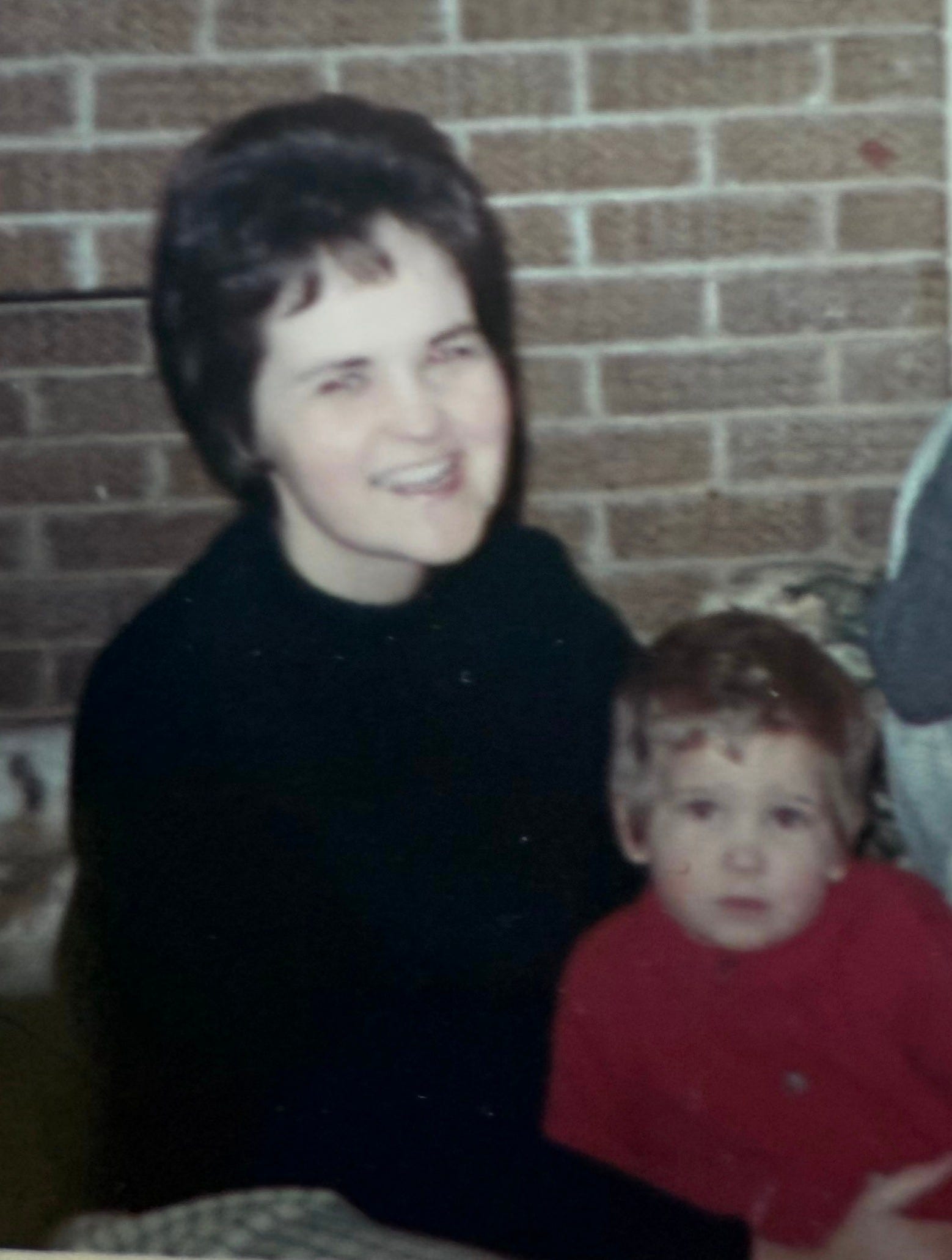
Mom was more playful than nurturing.
But she had her moments. When she died, the most vivid ones came flooding back.
Toddler me, sitting on her lap facing her. She held my hands as I leaned way back, trusting she wouldn’t let go.
Then she’d pull me upright again—like a carnival ride. Back and forth. I exploded in giggles.
Then she broke the news that there was a baby in her belly. I hoped for a little sister.
My baby brother was born instead.
I got over it.
On my sixth birthday, Mom surprised me with a paper birthday crown—the number six scrawled across the front in pink crayon—calling me “Queen for the Day” as she slipped it onto my head.
At nine, I had gotten lost after a solo train ride to the town we moved away from. When I returned the next day (once again, alone on the train), she ran toward me and wrapped her arms around me. She had been frantic with worry.
Did she hug me goodbye at the dorm room when she dropped me off at college? Or when I came home that first time?
I honestly don’t remember.
What I do remember is that Mom seemed more naturally affectionate with our dogs. She even dressed them better.
“I love you” didn’t really exist between us until I said it first as an adult.
Dad expressed his love frequently when I was growing up, which felt oddly uncomfortable. Likely because those three words never tumbled from my own mother’s lips.
Out in the world, I learned that hugs were what people did when saying hello and goodbye to someone they cared about. Physical touch was also a way to provide comfort. To say, I see you.
I found out saying “I love you” was also apparently a thing.
So I initiated the hugs and love you’s with Mom (and Dad).
Over time, she learned the drill.
Eventually, she even said “I love you” first, if only once in a while.
Her hugs stayed loose, though. With a light pat on the back for impersonal emphasis.
Except the day I learned my own body couldn’t carry a baby.
That day, she cradled me while I wept.
I’m assuming she hugged me each of the six times IVF didn’t work. And again when I announced my divorce. I don’t recall.
Recently, I stood in the kitchen looking out at the empty dining table on our deck. A faded movie of everyone sitting around it the weekend of my aunt’s celebration of life started playing my head. My other aunt was in town. My parents and younger brother were there. My Navy son.
Mom came inside for something and I broke down. “I don’t what I’m going to do if something happens to you or Dad.”
She laughed her laugh and opened her arms. I fell into them.

Feeling loved and being loved aren’t always the same experience.
Mom was there for all the messy arcs of my life.
Her being there mattered. It was more than a lot of people can say about their moms.
Maybe I got lost in the shuffle, the only girl between two boys.
My older brother was the golden child.
My younger brother was all smiles and dimples. She smothered him with kisses through his toddler years, maybe beyond. She always said he reminded her of her beloved father, who took his own life less than ten years earlier. The father she described as warm, loving, and openly affectionate.
Mom always said I was the most difficult to raise.
I absorbed that instead of asking why.
I was always vying for attention. For approval. For something.
She also said she never had to worry about me.
I was getting decent grades, as if that was the only indicator of not needing much.
Hell, I don’t think I even realized what I needed or what I might be missing.
(In all honesty, while I absolutely love hugs, I still have to resist the urge to be the first to pull away if they linger too long. Unless it’s my son or husband.)
In her last year, boundaries began falling away.
Time was closing in.
She expressed gratitude that I was the one handling everything.
Dad’s last breath. His ashes.
Piecing together their finances, accounts she’d forgotten about.
Sitting beside her while she chose no treatment. The hospice calls.
The only daughter.
The difficult one.
When she got so sick from RSV that I thought she might die, she cried out when I walked into her assisted living room.
“My baby girl! My baby girl is here!”
As if she’d always called me that. As if she’d always been that excited when I walked into a room.
Maybe vulnerability cracked something open. Maybe it was the drugs.
She grabbed my hand and gently caressed it.
Not like her at all.
No other memories of affection come easily.
I was the one who dropped everything when she fell that last time.
Our last hug was loose as always. A light kiss on the cheek.
“I love you.”
Our last words to each other.
At least until she starts haunting me.
Thanks so much for reading. It really does mean a lot.
If this piece resonated with you, I’d love if you tapped the heart button or shared my work.
Of course, I always love your comments, too.
Most of my essays and Notes are free for everyone. But if you’d like to support my work in a bigger way—and it’s in your budget—consider becoming a paid subscriber. You’ll help fund my ridiculous chocolate habit and improve the odds of my husband retiring before seventy.
But honestly, just having you here matters most.
A few reader favorites…



More about me…
I live in the Chicago suburbs with my husband, chasing my lifelong dream of writing a novel. When I’m not sharing memoir-ish stories and unfiltered thoughts, I’m blending smoothies, walking backwards, or staring at my phone waiting for a text from my Navy son. Read more about why I write here.
That last line killed me! I have a complicated relationship with my 90-year old mom (in that I'm the only one who recognizes why it feels complicated). While we selected flowers for the graves of lost family members last weekend, she made a specific (difficult) request about her own burial. How can I refuse? I told her. "I will haunt you if do," she said.
Thanks for sharing how you have processed your own mother complications
Heartbreaking, Lynn 💔 My dad was like that. He never hugged me growing up or said 'I love you', it was all Mum. But when he got older, he did. It's bizarre how they change when they become vulnerable, as you say. It's so true. It's like they know they should've done better or something. At least, that's how I felt about my father. You were there for her when it mattered. I always think when I read stories about difficult mother/daughter relationships - if only mothers knew it's most likely the daughters who'll be there at the end, so nurturing that relationship would be so much more beautiful. Do you know what I mean? I'm sorry for all your losses, Lynn. 🤍